
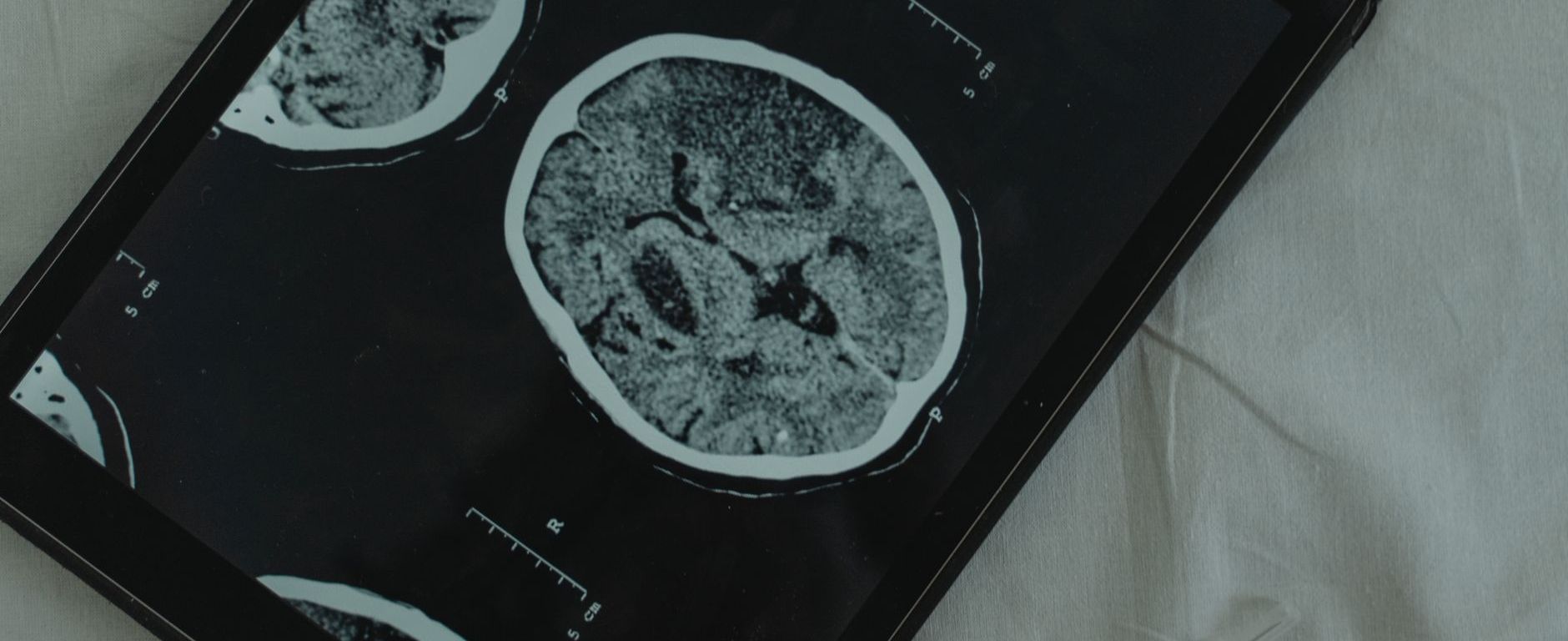
According to Norman Doidge, it is possible to make blind people see again, to recover from a debilitating stroke, and to live life with only half of a brain. To somebody who has not read The Brain That Changes Itself, these must seem like ridiculous assumptions that border on the sci-fi, but through the simple biological phenomenon of neuroplasticity these things, and many more, become possible. Doidge takes the reader on a tour of the pioneering ‘neuroplasticians’, as he calls them, who succeed in breaking the oppressive scientific paradigm of ‘localizationism’ and therefore change modern neuroscience. We are taken from Nobel Laureates to psychoanalytic patients, from the ‘father of neuroplasticity’ to a Soviet psychologist, to turn even the most sceptical readers into firm believers of neuroplasticity.
In 1861, Paul Broca made a discovery[1] when dissecting the brain of a stroke patient who had lost the ability to speak and could only utter one word, ‘tan’. It was found that he had damaged tissue in the left frontal lobe, an area presumed to be involved in forming speech, and so this area of the brain was called Broca’s area. This, as well as other discoveries which refined the ‘brain map’, led to the widespread belief that the brain has specific areas which only deal with one function and nothing else, and that these areas cannot be changed. There is the visual cortex for processing what we see, the motor cortex for coordinating movement, and so on, and these areas are the same in everybody. This theory came to dominate modern neuroscience and was known as ‘localizationism’, but Norman Doidge sets out to break this paradigm and show that this view of the brain is too simplified.
The book contains a deep dive into the hard science of neuroplasticity and how it works at a cellular level. We follow Michael Merzenich, an eminent neuroscientist often hailed with the title of the ‘father of neuroplasticity’. He was inspired by the work of Nobel Prize Winners David Hubel and Torsten Wiesel who discovered the ‘critical period’ which is the idea that, when we are young, our brain has certain phases of extremely high neuroplastic change which allows our brains to develop. They discovered this in kittens[2] as when they sewed shut one of a kitten’s eyes during infancy it remained blind in that eye for life, while the area of the brain that was meant to process the shut eye was helping to process the open one. This meant that there was a time in infancy when the ability to process sight developed, and when this window closed the cat could never learn it again. There was clear rewiring and development of the brain, and critical periods were found with other mental functions, such as language learning. These experiments ultimately led to the idea that our brains are plastic, but only in infancy after which we develop specific functional areas which do not change. Merzenich was about to change this, however, and prove that neuroplasticity happens in the adult brain as well.
Merzenich did some ingenious experiments on monkeys to prove this[3]; one example was that he cut the nerve connecting the brain to the middle of the hand and found that, after a few months, the brain area that was previously used to process touch in the middle of the hand was actually being used to process it on the outsides. These brain maps had almost doubled in size and had ‘invaded’ the brain area corresponding to the middle of the hand which had stopped receiving any input. This experiment proved that neuronal connections that did not receive any input, and so did not ‘fire’ signals, were weakened and taken over by other more active functions. There is an almost Darwinian system within the brain where, if we do not use a certain brain area enough, it is simply taken over by neighbouring ones which we use more. He then tied the fingers of a monkey together, and the brain maps for the two fingers seemed to merge together and become one.
This showed another basic concept of neuroplasticity: that neuronal connections are made when neurons fire signals at the same time, or ‘neurons that fire together wire together’. When the movements of the two fingers were synced, their neurons fired at the same time when they moved, and so the brain was unable to differentiate between the two fingers, and their maps merged. Then, when the fingers were untied and their movements ceased to sync, the two maps slowly began to differentiate and the fingers could be moved separately again, showing another related concept: ‘neurons out of sync fail to link’. Neuronal connections occur when two neurons fire in time with each other, and the more this happens the stronger the connection gets. Through these ingeniously simple experiments, Merzenich had found the basic concepts of neuroplasticity.
Many of the findings outlined in the book hint at a tremendous power for neuroplasticity, and many of them seem to have stood the test of time. Since the book was written in 2007, it is possible to look back, now, at how the claims he made almost 20 years ago stand today, and what I found in my research was mostly positive. For example, Doidge leads us through an exploration of Edward Taub’s groundbreaking treatment aimed at helping people recover from chronic strokes. A stroke is an interesting neuroplastic phenomenon as the lack of oxygen flow in the brain during one can lead to severe brain damage, and so it is interesting to see whether it can adapt and re-organize itself to recover. Taub, aided by his research on monkeys[4], created a stroke recovery treatment called ‘Control Induced Therapy’. Chronic strokes often lead to inability to move or control one’s limbs, but Taub’s treatment forced patients to move their affected limbs through a programme of intensive exercises. By doing this, the brain is slowly forced to re-learn how to use the limb by rewiring itself. It seems that, even today, this is a widely accepted and used therapy for stroke victims that is backed by the scientific literature, as shown in a 2022 meta-analysis of its effectiveness[5].
Doidge’s chapter on phantom limb pain also seems to have some backing. Here, we follow V.S. Ramachandran in his discovery of ‘mirror therapy’ in treating phantom limb pain. The idea is that, even after a limb is amputated, the sensory neurons in the brain remain and can continue to fire, meaning a patient will feel like their limb is still there. This can often lead to negative effects, such as constant pain, and so Ramachandran’s breakthrough was to use a device which made it look like the limb was still there, thereby ‘tricking’ the brain into thinking the arm is there and that it is fine. The idea is that this will stop the phantom limb pain as the brain will get visual signals saying that it is there and not in pain. Doidge makes it sound like this works well as he claims about half of Ramachandran’s patients lost their phantom pain.
Overall, The Brain That Changes Itself is a fascinating book which provides an accessible insight into the science of neuroplasticity, and I would very much recommend it to anybody interested in the brain. Doidge achieves what he set out to do: to prove that the brain can change throughout our lives, and he helped to cement this idea into the current scientific paradigm. The book may be slightly dated, but this makes it important in understanding the context of advancement in neuroscience. In order to gain a proper understanding of the science it is important to look back at how it has progressed, and I believe this book provides this context for a modern reader. I would also recommend it to the casual reader today, as many of the ideas in the book are still not widely known and if anything, you are bound to find something interesting to say at a dinner party.
[1] Berker EA, Berker AH, Smith A, “Translation of Broca’s 1865 report. Localization of speech in the third left frontal convolution,” Archives of Neurology, 43 (1986): 1065-1072
[2] Thomas N. Wiesel and David H. Hubel, “Extent of recovery from the effects of visual deprivation in kittens,” Journal of Neurophysiology, 28 (1965): 1060–1072.
[3] Dr. M.M. Merzenich et al., “Somatosensory cortical map changes following digit amputation in adult monkeys”, The Journal of Comparative Neurology, 224 (1984): 591-605.
[4] Edward Taub, Israel A. Goldberg, and Phyllis Taub, “Deafferentation in monkeys: Pointing at a target without visual feedback”, Journal of Experimental Neurology, 46 (1975): 178-186.
[5] J.S. Tedla, K. Gular, R.S. Reddy, et al., “Effectiveness of Constraint-Induced Movement Therapy on Balance and Functional Mobility in the Stroke Population: A Systematic Review and Meta-Analysis”, Healthcare (Basel), 10 (2022): 495.

