
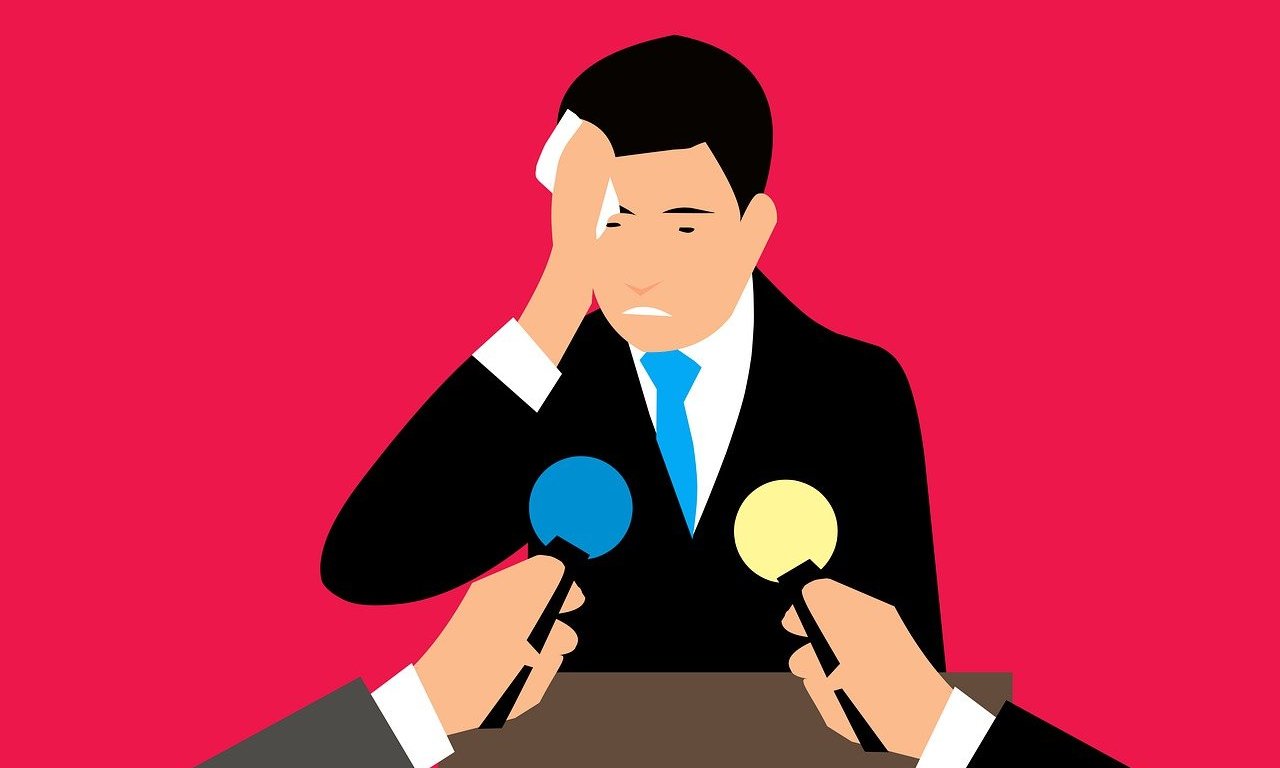
You have put in the hours, studied tirelessly for weeks, and, with a good night’s sleep, are feeling pumped for this one final exam. But as you stare into the questions before you, flicking through the pages, your mind solely draws blank after blank, and next your heart begins to pound out of your chest as panic overwhelms you. The clock mercilessly ticks on, echoing in the exam hall as you forcefully conjure a few breaths before you reluctantly respond to whatever you can, praying on the possibility that you may just scrape by.
So, what went wrong? Under the mountain of pressure, you choked.
Fumbling under pressure is far from a minor dip in performance, yet in turn, when anxiety in the heat of the moment hijacks our capabilities to give a reasonable account of ourselves, this is performance anxiety. Whether it is doing a weekly vocab test, or making your Ties debut, performance anxiety can arise in almost any given situation. Therefore, I feel that it would not cause too much harm to gain a deeper understanding of this topic.
Desperately wanting to perform at your best but being concerned about your abilities can create performance anxiety and, if not managed correctly, can overcome even the most experienced and confident of talents. It can manifest emotionally in the form of fear or worry, cognitively via negative self-talk, physically by nausea or headaches, and behaviourally in social withdrawal, which can strain relationships.
But how exactly does it arise? Attitudes of perfectionism, fear of failure, and self-doubt can all add up to cause this phenomenon. Furthermore, cognitive distortions, which are patterns of thinking that exacerbate anxiety, worsen the issue. These distortions are often based upon irrational and negative thoughts, which develop a distorted view of reality. Patterns such as catastrophising, all-or-nothing thinking, mind reading, and overgeneralisation can all trigger anxiety, and coupled with negative memories of criticism or failure from the past will intensify the matter with a fear of repetition.
Expectations from peers, family, or a competitive environment can also prompt performance anxiety to spiral, and, in fact, simply anticipating a stressful event can cause it. Research by Levi Gadye has portrayed how those anxious about maths display signs of performance anxiety simply when they believe they are going to do maths. Gadye went on to figure out that the insular cortex, a region associated with feeling threatened and even experiencing pain, is activated here, suggesting the anxiety may feel genuinely painful. Moreover, diverting our attention too much to routine actions can be counterproductive, where during practised tasks it is normal for the activity of the prefrontal cortex (necessary for decision-making and attention) to be low. This permits other areas of the brain, like the cerebellum and motor cortex, to handle routine actions without interference. However, overwhelming anxiety reactivates the prefrontal cortex in a fight-or-flight response, more often than not disrupting these circuits, leading to slip-ups in our performance.
One in four people experience anxiety at some stage in their lives, which can manifest in more than just performance anxiety. Anxiety on the whole is influenced by both nature and nurture, with studies shown in 2014 by a collaboration of the University of California and Yale highlighting that if parents are anxious, their children may be genetically predisposed to it too. Likewise, parents can unintentionally reinforce anxious tendencies in their children by being overprotective or leading to the avoidance of uncomfortable situations (this is not suggesting parents cause anxiety but indicating that both upbringing and genetic makeup contribute to its development). In the context of education, up to 40% of students experience assessment anxiety, with rates higher among those with disabilities and marginalised groups too. A study in the American Journal of Psychiatry linked diet to anxiety levels too, where a Western diet of processed and fried food contributes to significantly higher levels of anxiety compared to a balanced one rich in fruit and vegetables.
In the world of sport, attention is regularly prioritised on the heroic comeback tales where an underdog wins last minute; however, the story of second place is often forgotten, where performance anxiety can be incredibly influential and can be seen in the most successful of athletes worldwide. For example, Greg Norman’s loss at the 1996 Masters is considered one of the most prevalent ‘chokes’ in sporting history. With a 6-shot lead going into the final round and despite his experience at the age of 41, Norman’s game fell apart due to nerves allowing Nick Faldo to win by 5 shots. In contrast, many infamous celebrities have suffered from performance anxiety, from the likes of Rihanna to Cicero. Notably, Jay-Z had 99 problems, and stage fright was one of them, particularly in his early career, where the artist from Brooklyn explains, ‘I am so nervous right now, and I’m scared to death. I’m going to act so tough that I’m going to hide it.’ Moreover, when Churchill comes to mind, we recall his great speeches of World War II that galvanised the country, but it was never always that easy. Churchill battled with a speech impediment and often froze, unable to speak more than a few words due to nerves.
Fortunately, there are several behavioural tricks for keeping cool under pressure. A Harvard Business School inquiry discovered that simply re-labelling anxiety as excitement shifts the focus to positive anticipation in the place of fear, creating a more constructive emotional state. Focussing on breathing and exercising have a huge positive impact on anxiety in general by countering stress via hormones released and refocusing attention. Additionally, the body shake has been proven to release nervous energy by shaking out muscle tension, signalling the brain to relax, and the butterfly hug, which involves alternate shoulder taps, aids to calm performance anxiety by promoting a grounding effect through bilateral brain stimulation.
To conclude, performance anxiety is part of being human, and even the most accomplished individuals have faced it. So, next time you feel overwhelmed, remember that it’s not a sign of failure but a shared experience. Everyone stumbles under pressure, but it is how you handle the moment that matters. With understanding and a few strategies, we can turn that nervous energy into strength, learn from the experience, and emerge even stronger.

