
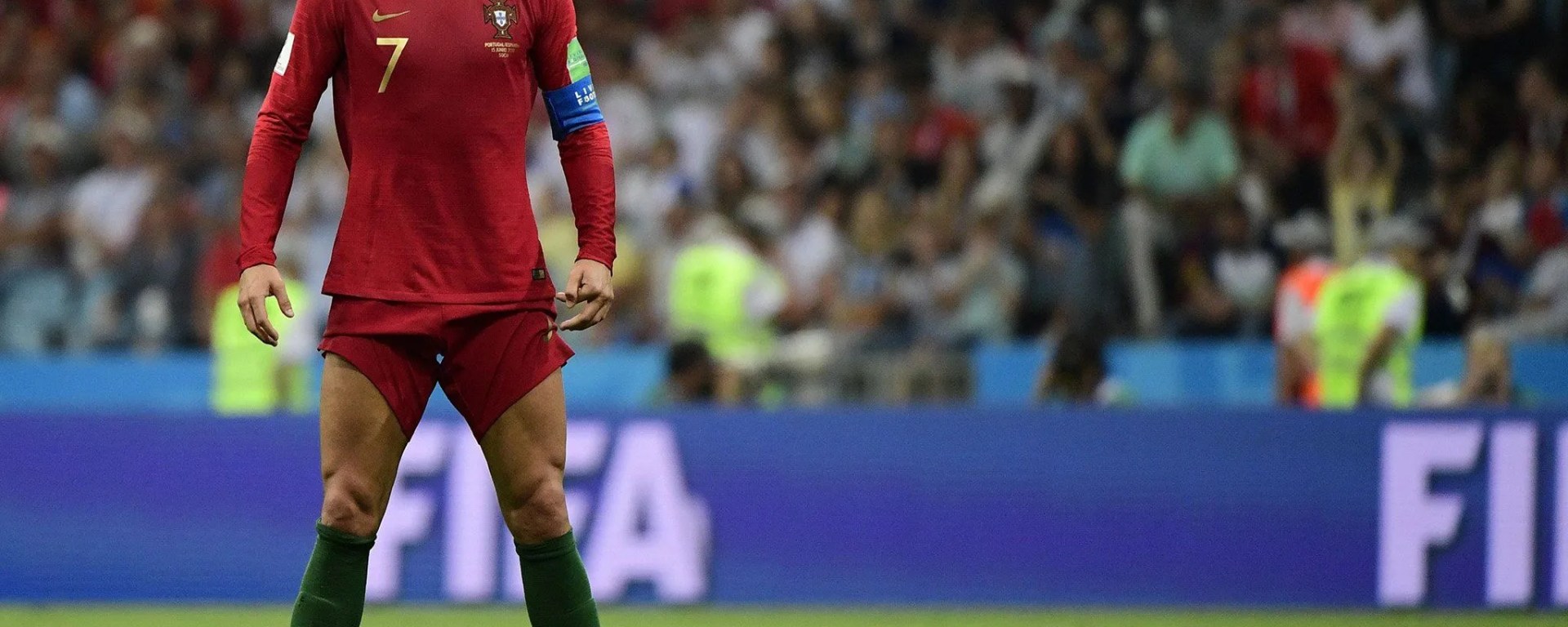

For football fans, there is nothing more exciting than a penalty shootout. The final decider between two teams, still deadlocked after hours of football. There is also nothing in football that generates as much debate as penalties. Should you take first or second? Should you predetermine where you are going to shoot? How long should you wait for before shooting? How can the best footballers in the world fail to score from 12 yards out? These are all questions which are asked, analysed and studied in footballing domains across the world.
But, what are the answer to these questions? And what can psychological studies assist football teams with, in their search for penalty perfection?
Why are Penalties difficult?
To the average observer, a penalty kick should be a foregone conclusion, especially in professional football. Many would expect players who spend their careers trying to score goals from much further out and with many more obstacles in their way than a simple 12-yard kick with only a goalkeeper in their way, to easily score a penalty kick nearly 100% of the time.
But, in reality, the success rate for a penalty kick is 85%, and this drops even further to 76% during a penalty shootout. But why is this?
Studies have shown that penalty kicks, and especially shootouts, can be seen as the ultimate pressurising football situation. Because of how simple a penalty seems, the goalkeeper assumes a mentality of seeking to beat the odds and become a hero, whereas for the penalty taker they have the pressure fully on their side, and are expected to score, especially in a shootout, where a missed penalty is often the difference between a win and a loss.
Additionally, another factor which influences the relatively low success rate of penalties is mental fatigue. As a football match progresses, and if the game is taken to a shootout (normally after over 2 hours of football), a player can become very mentally fatigued. This can lead to poor cognitive performance and as a result, ineffective penalties.
Before the Penalty:
The psychological battle of a penalty shootout begins long before the first kick is taken. The first battle is decided with the coin toss that precedes the shootout. As Professor IgnacioPalacios-Huerta (of the London School of Economics) discovered from studying 129 penalty shootouts, the team that wins the toss and elects to shoot first wins over 60% of the shootouts.
This phenomenon is attributed again to the relationship between pressure and penalties. When a player is taking second in a shootout, often they have to score to not lose. This means that the consequences of a miss are made extremely clear to them, and this additional pressure can lead to an overload of stress and a hinderance of technique, leading to players blasting a shot over the crossbar, or placing it painfully wide. The study also shows that when a player is stepping up to take a penalty that will win the shootout for their team, they score 92% of the time. Whereas, when a player is stepping up to take a penalty which they have to score, if not to lose, they only score 60% of the time.
So, the first step to a successful penalty shootout, is to win the toss and take first.
During the Penalty:
The first key factor to consider when taking a penalty, is not to rush. Footballers who take less than 200 milliseconds (half the time it takes to blink) to respond to the referee blowing his whistle, only score around 57% of the time. In contrast, players who wait more than one second to take their penalty after the whistle, score over 80% of the time. Again this finding relates back to the factors of pressure and mental fatigue. The extra time taken to take a penalty can be used for a penalty taker to compose themselves and increase mental sharpness, whilst unnerving the goalkeeper.
Recently, Arsenal Football Club has benefited from studying this phenomenon and instructing players to wait longer before taking their penalties. In their Community Shield victory, on penalties, over Manchester City, every Arsenal penalty was taken after a longer wait than every Manchester City penalty.
Furthermore, another key factor for players is committing to picking a spot and placing it in that spot. Last minute changes can lead to uncertainty, stress, and poor technique. Picking a spot and placing it there, has a much higher success rate than simply blasting a penalty in a direction.
How is Penalty Psychology influencing the future of Football
Previously, there was little studying of penalties. Players were told to simply walk to the spot, take their time and score. Additionally, mantras such as ‘pick a corner and don’t chance your mind’ were often spouted as the key to scoring. Penalty takers and goalkeepers were both left largely to their own devices and outcomes were often unpredictable.
Over time, however, football clubs have become aware of the huge benefits of investing in research into the psychology behind penalty shootouts and how to maximise their chances. The advent of technology has led to an increase in the study of where to place a penalty. Clubs will spend hours, pouring over videos with both their penalty takers and goalkeepers to determine a specific plan for where each player will place their penalty. As a result, lots of the pressure can be taken off a player, they no longer have to deal with last minute nerves about where to place a penalty, instead simply follow a plan.
The impact of studies like this can be seen in the 2008 Champions League Final, between Chelsea and Manchester United. Chelsea had studied the weaknesses of Manchester United goalkeeper, Edwin van der Sar and determined that his left-hand side was weaker than his right. Each of Chelsea’s first 6 players all put their penalties to his left, and van der Sar didn’t save a single one. However, the impact of mental fatigue and human fatigue can still have impacts in disturbing the plan, as highlighted by Nicholas Anelka abandoning Chelsea’s plan, shooting to van der Sar’s right and having his penalty saved.
Lastly, another significant development in penalty shootouts is that penalties are now oftenpractised under pressurised situations, to simulate the mental fatigue and pressure which is present in game scenarios. Whether this means taking penalties after a full training session, or having teammates jeering while a penalty is practised, techniques like these can help to develop a preparation for the real situation.
So, the field of penalty shootouts, although simple on the surface, is far more complicated than often thought. And despite all the research and analysis, is still largely unpredictable and exciting. Perhaps this is why penalties are so adored by football fans.

